


Executive Summary: NOAA – the National Oceanic and Atmospheric Administration, a U.S. scientific agency that studies and predicts changes in weather, climate, oceans, and coasts while managing marine and coastal resources – has officially declared El Niño with a 63% probability of a Super El Niño, marking one of the fastest regime shifts on record and setting up a highly nonlinear global macro shock into 2H 2026 and early 2027. The event interacts with already tight commodity markets and ongoing geopolitical disruptions, amplifying transmission through food inflation, energy systems, logistics bottlenecks, and commodity supply shocks. Emerging markets face asymmetric exposure via inflation, fiscal stress, and external balances, while select sectors benefit from price spikes and benign insurance loss dynamics. The resulting environment creates a high-dispersion credit landscape with pronounced winners and losers across sovereign and corporate risk.
Market Visualizer
SUPER EL NIÑO: THE CLIMATE RISK TRADE
Theme Setup and Probability Skew
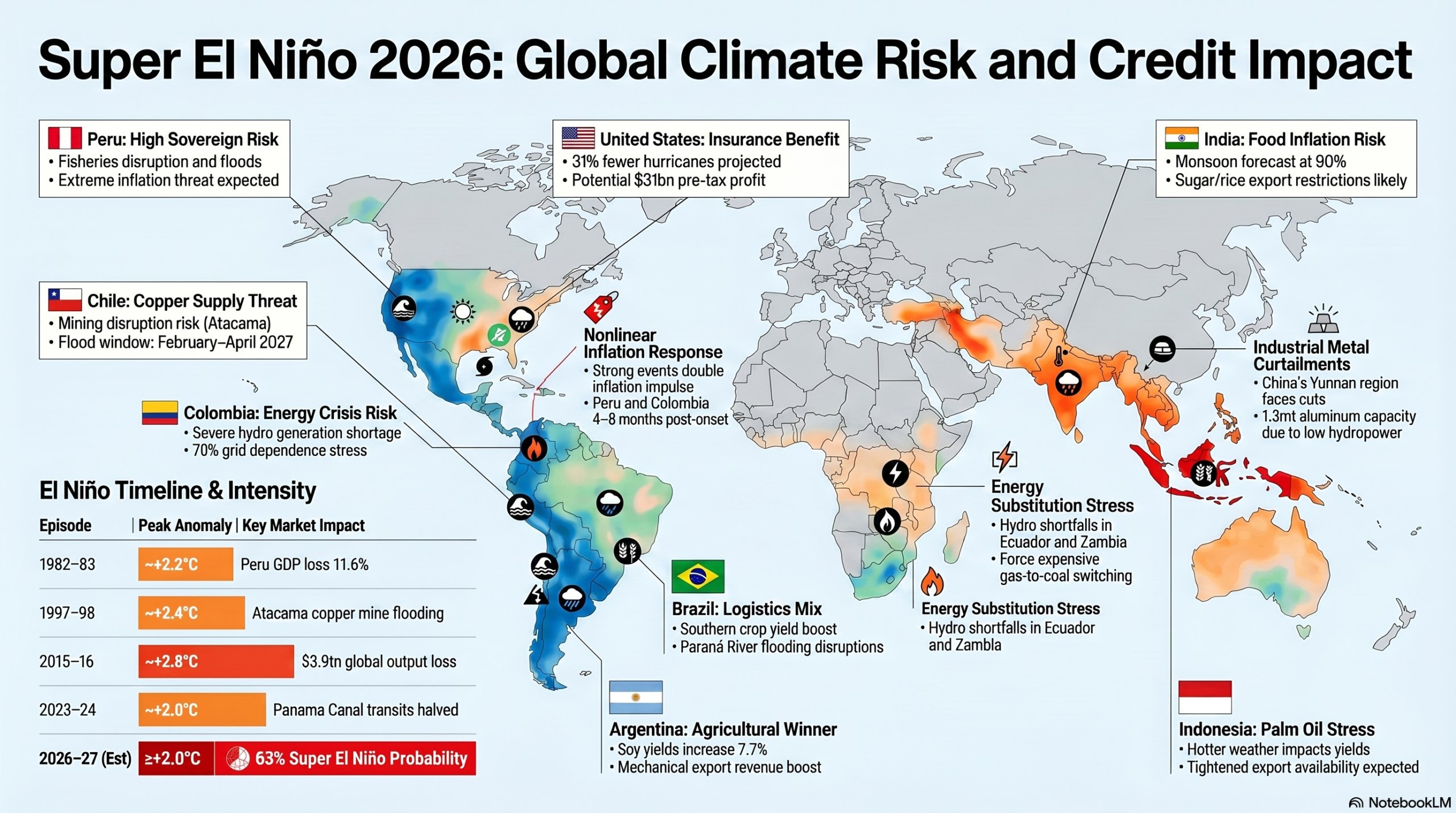
- Rapid regime shift: Sea surface temperatures flipped from La Niña conditions in March 2026 to El Niño by June 11, setting a record pace and signaling an aggressive thermal buildup that historically correlates with stronger downstream climate shocks.
- Super El Niño probability: NOAA assigns a 63% probability of ≥+2.0°C by NDJ 2026–27, while some sell side research forecasts a 60% probability of strong-plus events, implying elevated tail risk for severe macro and credit dislocations.
- Subsurface heat reservoir: Temperature anomalies exceeding +6°C below surface levels provide a structural driver of sustained warming, increasing persistence into 1Q 2027 and deepening economic transmission.
- Upper-tail scenario risk: Some models exceed historical intensities seen in the past 80 years, suggesting potential nonlinear impacts that surpass prior episodes such as 2015–16.
- Compounding macro backdrop: Elevated energy prices linked to Iran/Strait of Hormuz tensions increase cost-push inflation risks, reinforcing El Niño’s supply-side shock across EM economies.
Historical Precedent and Structural Differences
- Growth destruction magnitude: The 2015–16 El Niño reduced global output by an estimated $3.9tn over five years, highlighting the medium-term persistence of climate shocks beyond initial weather effects.
- Country-level losses: Peru experienced GDP losses of 6.2–11.6% during past strong events, underscoring sovereign vulnerability in directly exposed coastal economies.
- Commodity disruption track record: The 2015–16 event disrupted ~90kt of copper supply and forced ~300kt aluminium curtailments, demonstrating sensitivity in industrial metals supply chains.
- Food shock evidence: India’s monsoon decline of −13.8% in 2015–16 drove food inflation to 6.2%, illustrating transmission from weather to CPI and policy tightening risks.
- Current cycle tighter starting point: Unlike prior cycles, the 2026 copper market already faces a 300–400kt deficit, amplifying price sensitivity and credit implications from supply disruptions.
Macro Transmission Channels to Credit
- Nonlinear inflation response: Sell side models show inflation more than doubles moving from mild to strong El Niño, with peak effects lagging 4–8 months into H2 2026, creating delayed policy pressure.
- Food CPI transmission: With food comprising 10–35% of EM CPI baskets, any supply shock feeds directly into headline inflation, tightening financial conditions and pressuring sovereign credit.
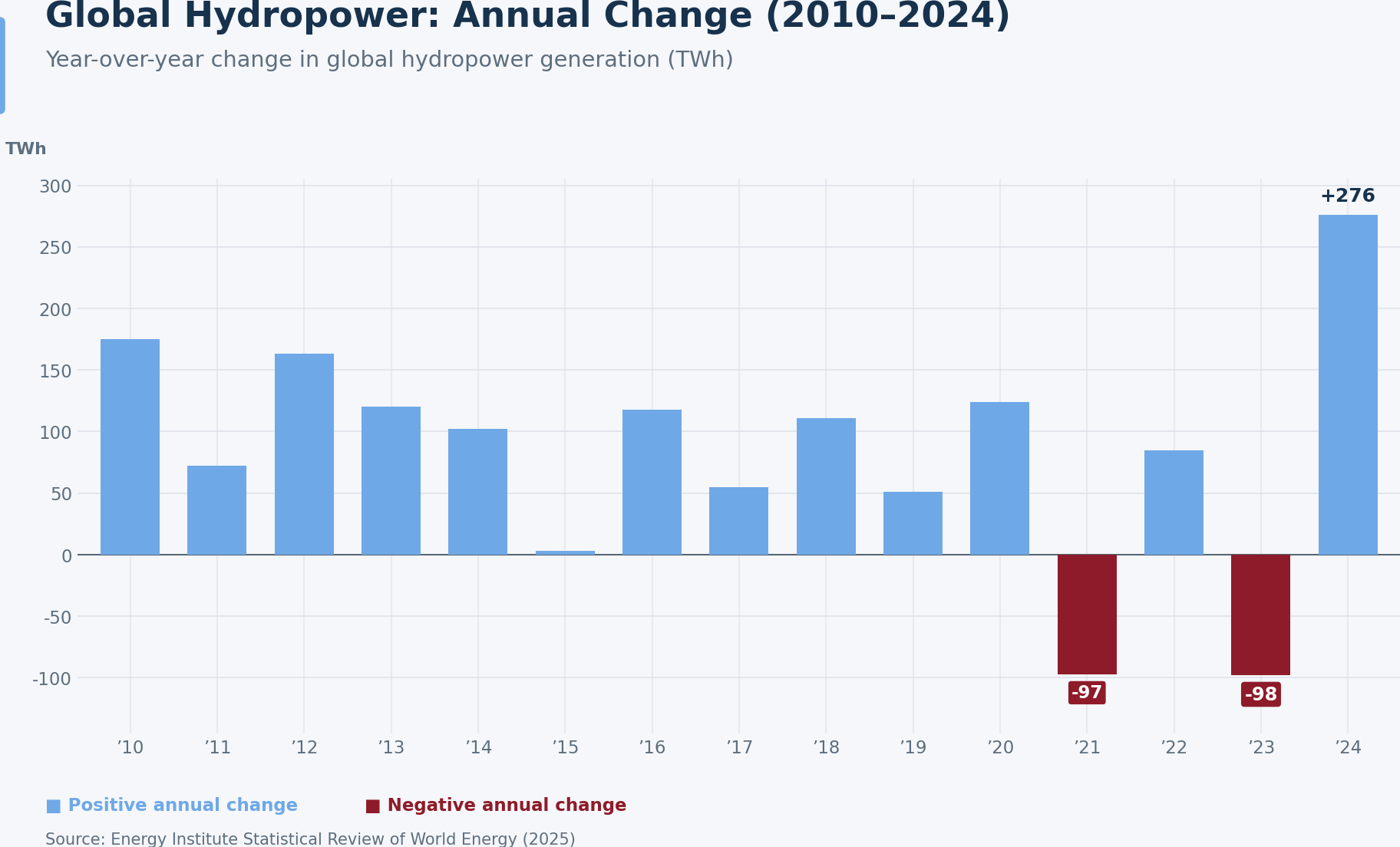
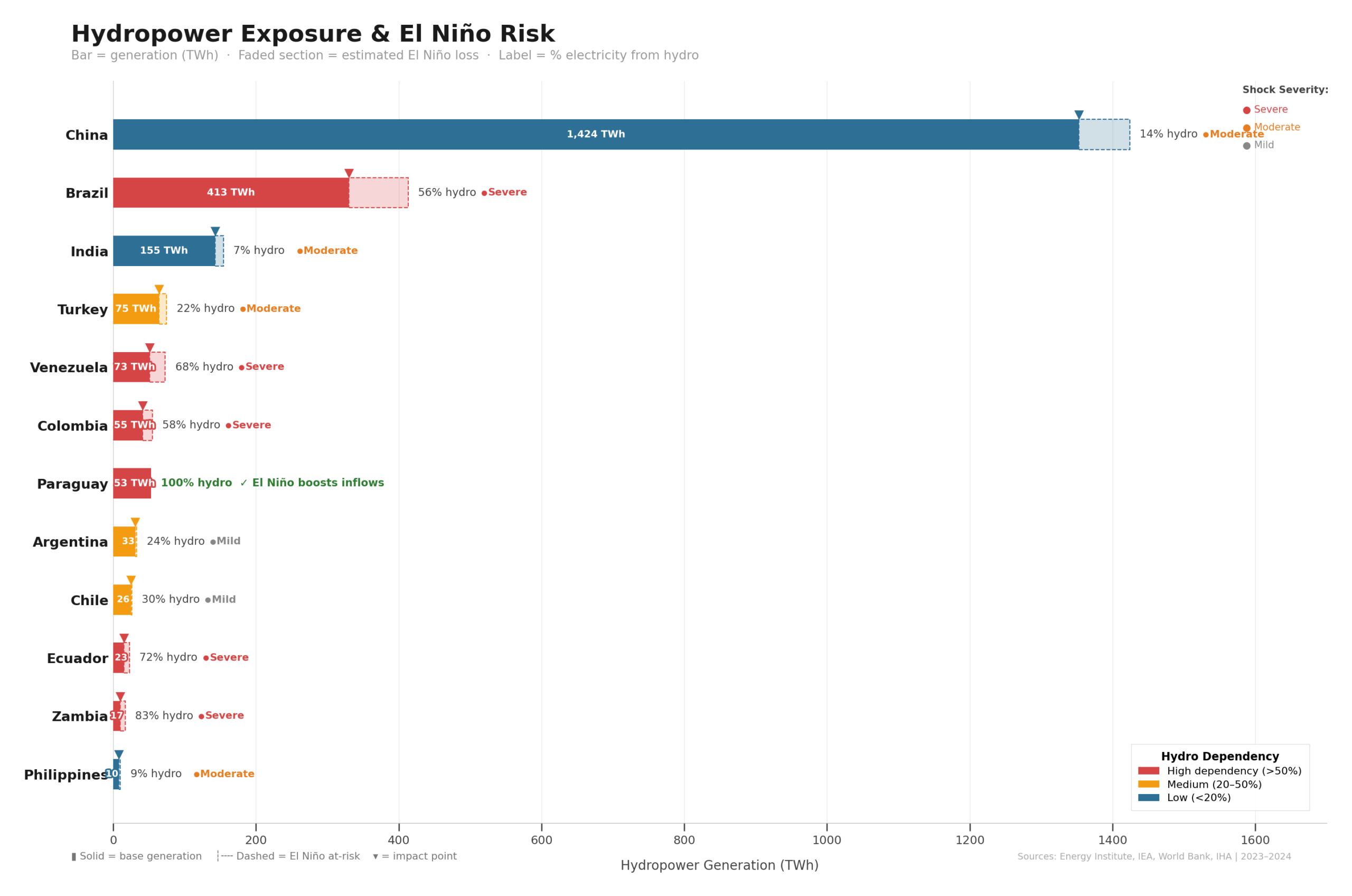
- Hydro-to-thermal switching: Drought reduces hydro output (e.g., Colombia 60–70% hydro dependence), forcing coal and LNG substitution at higher costs, weakening utility balance sheets and fiscal positions.
- Commodity price amplification: Chile’s 4.2mt copper production (17% global share) faces flood risk, where even a one-week outage (~80kt) materially tightens markets and boosts price-driven earnings volatility.
- Logistics disruption: Panama Canal throughput fell ~29% in 2024 during prior El Niño, indicating global shipping constraints that raise freight costs and delay supply chains, impacting corporate cash flows.
Sovereign Credit Differentiation
- Peru stress case: Direct ocean exposure, fisheries disruption, and historical GDP losses up to 11.6% position Peru as the highest-risk EM sovereign under a super El Niño scenario.
- India inflation risk: With an 84% probability of sub-normal monsoon, food inflation could breach the RBI’s 6% ceiling, driving fiscal slippage via INR500bn+ fertilizer subsidies.
- Colombia hydro vulnerability: Heavy reliance on hydropower combined with drought risks increases electricity prices and adds ~465bps to inflation during strong events, complicating monetary policy.
- Argentina upside skew: Soy yields improve ~+7.7% per degree of warming and maize output can rise ~6mt, supporting GDP (+0.31pp) and fiscal revenues via export taxes.
- Panama risk timing: While 2026 conditions remain strong with $5.7bn revenues, the 2027 dry season presents a key inflection point for canal revenue and sovereign balance implications.
Sectoral and Corporate Credit Impacts
- Agriculture input inflation: Cocoa prices previously exceeded $10,000/t and remain volatile, pressuring margins for processors and driving working capital expansion.
- Hydro utilities stress: EBITDA compression emerges as hydro shortfalls force thermal imports at higher marginal costs, particularly in Colombia, Ecuador, and Zambia.
- Metals upside asymmetry: Aluminium curtailments up to 1.3mt in Yunnan and 2.5mt already offline from Iran disruptions support price upside.
- Insurance earnings boost: Reduced hurricanes (−31%) and storms result in 14–20% lower global insured losses, implying $21–31bn pre-tax benefits for insurers.
- Aquaculture margin pressure: Fishmeal price spikes (~$2,500/mt) increase feed costs (40–45% of production), compressing margins for salmon producers unless offset via pricing.
Credit / Investment Implications
The Super El Niño shock is inherently nonlinear, with simultaneous supply disruptions across food, energy, and commodities amplifying inflation and compressing real incomes in EM. The asymmetric nature of exposure creates divergence, with import-dependent and hydro-reliant economies facing stress while commodity exporters and select corporates benefit. The interaction with tight commodity markets and geopolitical energy shocks increases the probability of outsized spread moves.
- Overweight commodity beneficiaries (thermal coal, aluminium, copper) where supply disruptions translate directly into EBITDA uplift of 3–17% per 10% price move.
- Underweight hydro-dependent sovereigns and utilities where drought-driven generation costs materially weaken fiscal and credit metrics.
- Position for insurance earnings upside but anticipate reinsurance pricing softening due to reduced loss environment and excess capital supply.
www.gembridgecapital.com
DISCLAIMER
This document is strictly confidential and is being provided to you for informational purposes only. It does not constitute an offer to sell or a solicitation of an offer to buy any securities or financial instruments. The information contained herein has been obtained from sources believed to be reliable but is not guaranteed as to accuracy or completeness. Opinions and estimates constitute our judgment as of the date of this material and are subject to change without notice.
AI Generation Notice: Portions of this content may have been generated or assisted by Artificial Intelligence (AI) technologies. Users should independently verify critical data points. Past performance is not indicative of future results.